For commercial lighting buyers, modular LED lighting is becoming attractive for a practical reason: buildings change, but conventional integrated fixtures are often difficult to change with them. A driver fails, the required color temperature changes, a tenant wants a different beam, or a replacement fixture no longer matches the original installation. A modular design separates selected parts of the luminaire so they can be serviced, replaced, or configured without changing the entire fixture. That can simplify maintenance and specification management, but only when the modules use clearly defined electrical, mechanical, thermal, and optical interfaces. For distributors, contractors, developers, and project purchasers, the real question is not whether a fixture is called “modular,” but whether its design reduces risk over the life of the project.
Why Are Commercial Projects Moving Toward Modular LED Lighting?
Commercial buildings rarely remain exactly as they were on opening day. Retail layouts change, hotel rooms are renovated, offices are divided into new zones, and lighting controls may be upgraded years after installation.
Why Does Replaceability Matter More in Commercial Spaces?
A sealed fixture can be simple to purchase, but servicing it may be less convenient. If the LED board and driver are permanently integrated into one assembly, failure of one component can require replacement of the whole luminaire.
Modular LED lighting takes a different approach. Depending on the design, the driver, LED light engine, optical module, trim, mounting part, or control component can be separated.
This matters when hundreds of fixtures are installed. Maintenance teams may be able to replace a failed component rather than search for a visually identical new luminaire several years later.
It also gives project owners more flexibility during refurbishment. A space may keep the same ceiling opening or mounting structure while changing light output, optics, or controls.
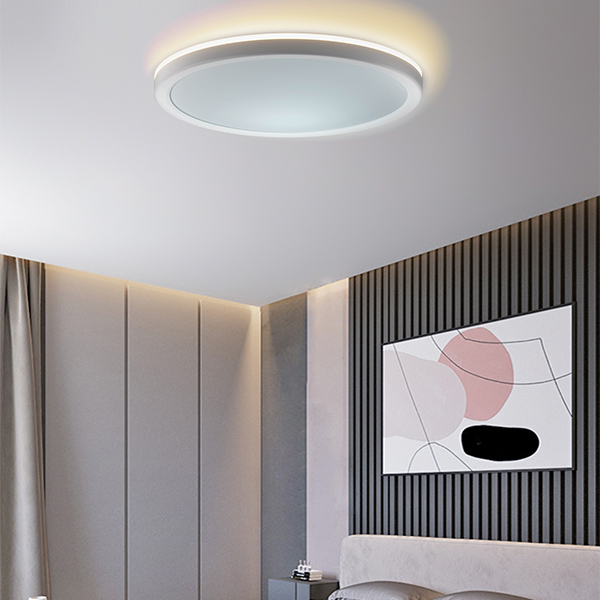
That is one reason modular thinking is increasingly relevant to commercial categories such as ceiling surface lighting and LED downlights.
Which Parts of a Commercial LED Fixture Should Be Modular?
Not every component needs to be removable. Adding unnecessary connectors and interfaces can increase cost and introduce additional failure points. Buyers should focus on parts that are likely to need service, configuration, or future replacement.
Which Modules Create the Most Practical Value?
A commercial luminaire may be divided into several functional areas:
| Module | Why Buyers May Want It Replaceable | What Must Be Controlled |
|---|---|---|
| LED light engine | Output or CCT changes, LED failure | Voltage, current, dimensions, thermal interface |
| Driver | Failure, dimming upgrade | Output current, wattage, dimming protocol, connector |
| Optical module | Beam or distribution changes | Beam angle, dimensions, positioning |
| Trim or housing part | Interior design changes | Finish, dimensions, mounting method |
| Control module | Sensor or smart-control upgrades | Communication protocol and electrical compatibility |
The driver is often one of the first components worth discussing. A fixture that allows driver access can be easier to maintain than one requiring the entire housing to be removed or discarded.
The LED module is more complicated. Replacing it successfully requires more than matching wattage. Drive current, forward voltage, board dimensions, connector type, heat transfer, lumen output, and optical position all need to remain compatible.
Does “Modular” Mean Every Part Is Interchangeable?
No. A replaceable component is not automatically a standardized component.
One supplier’s LED board may fit only one fixture family. A newer module may have the same physical size but use another operating current. A replacement optic may attach correctly yet produce a different beam.
Buyers should therefore ask for documented interfaces rather than relying on the word “modular.”
When Does Modular LED Lighting Reduce Project and Maintenance Costs?

Modular construction does not automatically make a fixture cheaper. Initial product cost can even be higher if connectors, removable parts, or more complex mechanical structures are required.
The economic advantage usually appears later.
Where Can Project Buyers Reduce Waste and Downtime?
Imagine a commercial property with several hundred matching luminaires. After several years, a small number of drivers fail. If the drivers can be accessed and replaced separately, maintenance does not necessarily require replacing complete fixtures.
That can reduce:
- replacement material
- installation labor
- ceiling disturbance
- disposal of working components
- visual mismatch between old and new fixtures
- time spent searching for discontinued models
There is another purchasing advantage: inventory.
A distributor may not need to stock a complete fixture for every possible configuration if several products share compatible modules. The same housing family might support different wattages, optics, or drivers, depending on how the system is engineered.
However, buyers should verify this before calculating savings. If every generation uses a different connector or mechanical interface, the expected modular advantage disappears.
When Is a Conventional Integrated Fixture Still Reasonable?
For low-cost installations with short refurbishment cycles, simple integrated construction may still be practical. The same is true when the luminaire is rarely accessible or when environmental sealing makes frequent disassembly undesirable.
The decision should follow expected maintenance, project scale, installation conditions, and planned service life—not a design trend.
What Specifications Should Buyers Lock Before Approving a Modular Fixture?
The more interchangeable parts a luminaire has, the more important specification control becomes. A quotation that says “modular LED light, 20W” does not provide enough information for repeat purchasing.
Which Electrical and Optical Data Should Be Recorded?
Before sample approval, buyers should document:
- rated system wattage and input voltage
- delivered lumens and luminaire efficacy
- driver output current and voltage range
- power factor and THD where project requirements apply
- CCT and allowable color tolerance
- CRI
- beam angle or photometric distribution
- dimming method, such as TRIAC, 0-10V, or DALI
- IP rating where required
- module and connector identification
- operating temperature requirements
- applicable compliance documents
For projects where visual comfort is important, buyers should also review glare, diffuser uniformity, visible LED points, beam edges, and consistency between samples.
Which Mechanical Details Are Easy to Miss?
A replacement module is useful only if it still fits.
Record connector type, screw position, mounting diameter, cutout dimensions, module thickness, heat-sink contact area, trim dimensions, and any keyed installation features.
The approved sample should be retained together with drawings and a BOM reference. If the driver, LED board, connector, optics, or thermal material changes later, the supplier should notify the buyer before production.
Certification should also be checked at complete-luminaire level. Depending on the destination market, buyers may need to review CE, RoHS, ERP, ETL, DLC, or other requirements. The LED Lighting Certification Guide 2026 provides a useful starting point for those discussions.
What Risks Should Buyers Check When Evaluating a Modular LED Lighting Supplier?
The biggest risk is assuming that replaceability today guarantees replacement parts tomorrow.
A technically sound modular program needs both product design and supply-chain discipline.
How Should Buyers Check Long-Term Compatibility?
Ask the supplier several direct questions before placing an order:
- How is each replaceable module identified?
- Can spare drivers or LED modules be ordered separately?
- Are connectors proprietary or commonly available?
- Will later revisions remain backward compatible?
- How long are spare parts expected to remain available?
- What happens if the original LED package is discontinued?
- Does a module change require new testing or documentation?
- Will component substitutions require buyer approval?
These questions are especially important for hotels, office portfolios, retail chains, and other projects that may expand in phases.
A fixture ordered three years later does not necessarily need identical internal components, but it should still deliver the required electrical, optical, mechanical, and visual performance.
What Should Be Checked During Sample Testing?
Do not approve modular construction only by taking the fixture apart.
Install it as an electrician would. Remove and reconnect the intended serviceable parts. Check whether connectors can be reached without damaging the ceiling, whether components are clearly identified, and whether reassembly affects alignment or heat transfer.
A good modular system should make future service predictable. If replacement requires special tools, undocumented wiring changes, or extensive dismantling, the practical benefit is limited.
How Can Lionway Electronics Support Modular LED Lighting Projects?
Lionway Electronics Co., Limited. is an LED lighting supplier focused on lighting design, mold development, product manufacturing, and project support. The company states that it has specialized in LED products since 2008 and operates facilities that include an optical laboratory and professional testing equipment. For commercial buyers evaluating modular LED lighting, this background can support discussions around fixture structure, optics, thermal management, driver matching, installation requirements, and sample approval. Buyers can also review existing ceiling, downlight, panel, wall, and other fixture categories when building a project specification. Before ordering, the practical step is still to confirm the exact BOM, replaceable parts, interface dimensions, electrical data, certification documents, and change-control terms for the selected model.
Conclusion
Modular LED lighting is gaining ground in commercial projects because it gives buyers more control over maintenance, specification changes, inventory, and future upgrades. The value is strongest when the interfaces are documented and replacement modules remain electrically, mechanically, and optically compatible. Buyers should compare complete luminaire performance, not the word “modular” on a quotation. Lock the BOM, approve samples, define spare-part expectations, and confirm change-control terms before mass production. For project support, contact the lighting team with your fixture and application requirements.
FAQs
1. What is modular LED lighting in commercial projects?
Modular LED lighting uses separately serviceable or configurable components, such as LED engines, drivers, optics, trims, or controls. The exact modular structure varies by fixture, so buyers should confirm which parts are actually replaceable.
2. Is modular LED lighting more expensive than integrated LED fixtures?
Initial cost can be higher because removable components and interfaces add design complexity. However, easier maintenance, selective component replacement, and simpler future upgrades may reduce total ownership costs on larger commercial installations.
3. Can an LED module be replaced with another brand?
Only when electrical, mechanical, thermal, and optical requirements are compatible. Matching wattage alone is insufficient. Buyers should verify drive current, voltage, dimensions, connector type, heat transfer, output, and optical position.
4. Which commercial projects benefit most from modular LED lighting?
Hotels, offices, retail chains, public buildings, and phased developments can benefit when fixtures must remain serviceable for years. Modular designs are particularly useful where consistent appearance and planned maintenance are important.
5. What should buyers ask a modular LED lighting supplier?
Ask about replaceable components, spare-part availability, connector specifications, driver compatibility, LED module identification, BOM control, photometric data, compliance documents, sample approval, backward compatibility, and the procedure for notifying buyers about component changes.