

An office floor lamp should solve a specific problem around the workstation. In some offices, the ceiling grid cannot be changed; in others, desks move often enough that fixed lighting no longer follows the furniture. A floor-standing fixture adds light where it is needed, but also introduces a base, cable, and driver. Buyers therefore need to know whether it fits the desk layout, feels comfortable from a seated position, remains stable, and can be reordered without obvious changes.
What Problem Is the Floor Lamp Supposed to Solve?
The answer should come from the workspace, not from the catalog. A lamp beside a private desk may improve task visibility, while one beside a meeting table may soften the room when ceiling lights are reduced.
Map the lamp to the furniture before discussing output
Put the sample where the final unit is likely to stand, then add the chair, monitor, storage pedestal, and nearby partition. From the user’s seat, look at both the work surface and the lamp itself.
This exposes problems that disappear in a showroom. A broad source can brighten the desk but also reflect in a monitor. A narrow source may make one reading area pleasant while leaving the rest of the workstation disconnected. Even the base can be wrong if it sits where a chair caster or floor box needs to go.
The useful question is not “How bright is it?” but “What changes for the person using this desk once the lamp is in place?”
How Can Buyers Tell Whether the Light Will Stay Comfortable for Hours?
Visual comfort is difficult to judge in a five-minute demonstration. Floor lamps remain close to the user for much longer, which makes small optical issues more noticeable.
Review the fixture from the chair, not from the doorway
Sit down and look toward the monitor, work surface, and lamp from several natural head positions. If a bright LED source, reflective edge, or concentrated diffuser remains in view, the lamp may feel harsher than its total output suggests.
Good task lighting should not create a tiny bright island surrounded by a much darker area. Color performance should also follow the work being done. A studio handling fabric, print, or finishes may need stricter color rendering than a standard administrative office.
CCT consistency is separate: several lamps with the same nominal color temperature can still look different side by side. Dimming should also be checked at reduced output for flicker, abrupt steps, noise, or visible color shift.
Which Practical Details Make a Floor Lamp Difficult to Use After Installation?
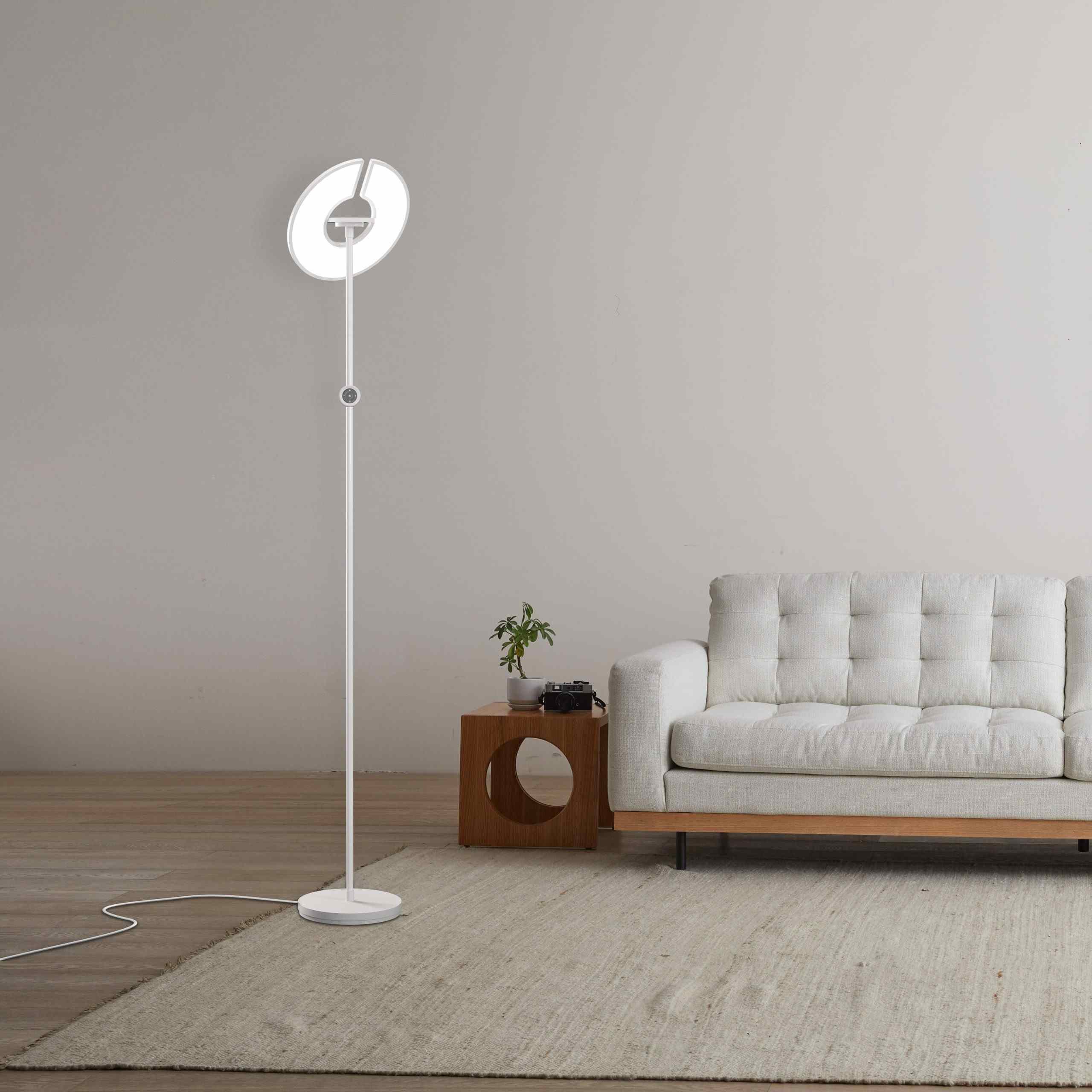
Some of the most expensive complaints come from details that barely appear in the quotation. A lamp can pass its electrical test and still annoy users because the cable crosses a walkway, the switch is awkward to reach, or the base feels unstable.
Treat the base, cable, and control as part of the workstation
Move the chair through its normal range with the lamp in place. Check whether the base blocks movement or forces the fixture too far from the desk. Test it on the intended floor finish as well; carpet, hard flooring, and raised access floors can change how stable a tall fixture feels.
Route the cable to the actual outlet or floor box. A lead that looks long enough on paper may still cross a circulation path once furniture is installed. Plug type and input requirements also need to match the destination market.
Controls should be tested from the user’s position. If dimming or switching requires somebody to stand up or reach behind furniture, the product may be electrically functional but poorly suited to the workplace.
What Should Be Tested Before the Sample Is Signed Off?
Sample approval should simulate ownership rather than become a visual inspection on a conference table. The buyer needs to know how the lamp behaves when it is adjusted, cleaned, and used repeatedly.
Run a small mock-up instead of adding more paperwork
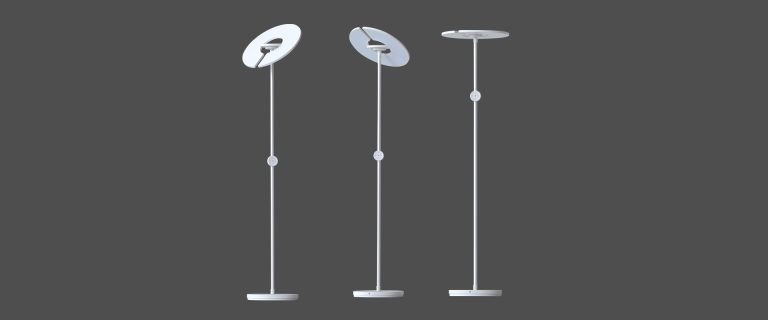
Operate moving joints several times and check whether they develop play. Move the lamp, clean the visible surfaces, and see whether handling marks become obvious. If a serviceable part can be reached, open and reassemble it to confirm that alignment does not change.
Packaging deserves one trial too. A floor lamp often combines a heavy base with long, more vulnerable structural parts, so unpack and repack the sample and see where the carton actually supports the product.
Before approval, record the details that would cause trouble if they changed later: drawing revision, main dimensions, optical configuration, driver and control arrangement, finish reference, cable and plug details, and packaging method.
How Should Buyers Control Bulk Production and Future Reorders?
A model name is not enough to preserve consistency. Suppliers may update drivers, diffusers, internal hardware, finishes, or packaging while keeping the same commercial reference.
Keep the approved sample as the comparison point
Store one approved unit with the project records whenever the order size justifies it. If a repeat order arrives months later, compare the new sample with the retained reference under the same conditions.
A revised diffuser can alter glare, a different driver can change dimming behavior, and new hardware can affect stability. Even a finish described by the same name may look different in the same room.
The objective is not to freeze every internal component forever. It is to identify which revisions can change what users see, touch, or operate, then require notice before those revisions reach production.
Need Help Matching Floor-Lamp Specifications to Workspace Requirements?
Lionway Electronics Co., Limited. describes capabilities in LED lighting design, mold development, manufacturing, optical-laboratory work, and product testing. Its Lotus Series LED floor lamp page lists Ra≥98 color rendering, 360° full-coverage illumination, and flicker-related performance claims; buyers should confirm the exact quoted configuration and supporting documents during procurement. The broader Lotus Series category provides additional product context, while drawings, workspace layouts, plug requirements, control preferences, and sample questions can be submitted through the contact page before final approval.
Conclusion
A commercial floor lamp should be approved as part of the workstation, not as an isolated decorative object. Buyers should look at where the light lands, whether the source is comfortable from the chair, how the base and cable fit the furniture plan, how the controls behave, and what changes when the product is moved or serviced. A realistic mock-up, followed by a retained sample and clear project record, gives purchasing and quality teams a stronger basis for controlling production and later orders.
FAQs
1. Should an office floor lamp be tested with the actual furniture layout?
Yes. Desks, monitors, partitions, chairs, and floor boxes all change how the lamp works in practice. A realistic mock-up can reveal glare, blocked chair movement, poor cable routing, or uneven task lighting that may be missed in an empty sample room.
2. Is higher wattage a useful way to compare office floor lamps?
Only to a limited extent. Wattage describes power consumption, not how effectively the light reaches the work surface. Buyers should also compare source height, distribution, glare, positioning, dimming behavior, and interaction with surrounding furniture.
3. When does high CRI matter most in an office environment?
It matters more in design studios, showrooms, material libraries, printing areas, and other spaces where people assess physical colors or finishes. In general office work, glare control, distribution, CCT consistency, and screen comfort may be equally important.
4. Why should buyers compare several samples before a large order?
One sample can hide variation. Running several units together makes differences in white tone, output, diffuser appearance, dimming response, finish, and mechanical feel easier to detect before those differences are repeated across a larger installation.
5. What should trigger a new review on a repeat floor-lamp order?
Any change that may affect appearance, light distribution, dimming, stability, controls, cable arrangement, or serviceability deserves review. Drawings may be enough for minor revisions, but visible or functional changes may justify another physical sample.