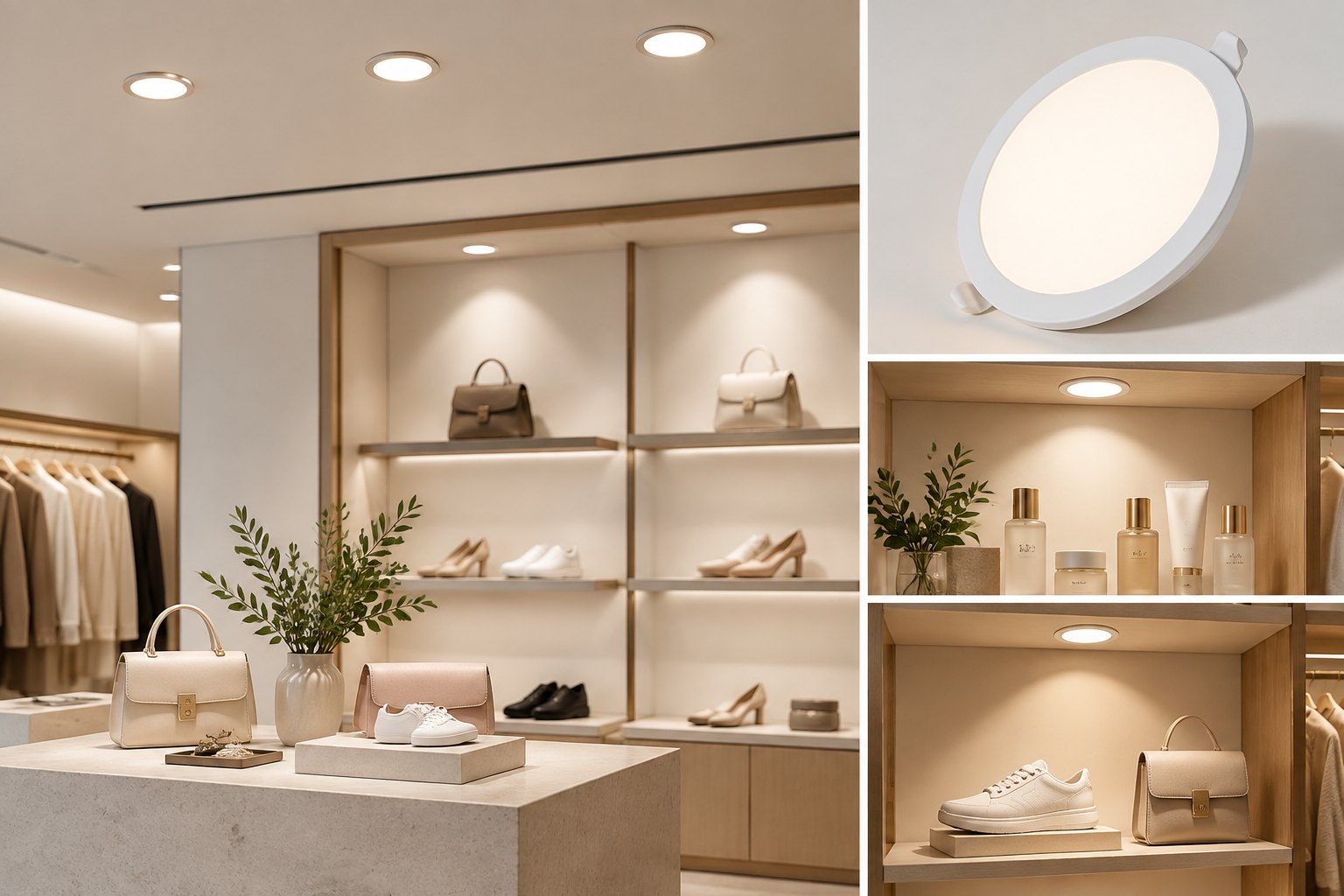
Many retail brands do not notice lighting problems until the first store is already operating. The products are displayed correctly, the shelves are installed according to the design, yet the overall impression is different from the original concept. A featured product may not attract enough attention, colors may appear slightly changed, or two stores using the same design may create different shopping experiences. The reason is that display lighting is closely connected with merchandise, not just the amount of light in the room. Selecting LED downlights for retail applications requires understanding how products, beam distribution, color performance, and installation conditions work together.
How Can Retail Brands Decide Which Products Need Lighting Emphasis?
A store does not need every product to receive the same visual treatment. The role of lighting changes depending on what the retailer wants customers to notice.
The merchandise usually determines the lighting direction
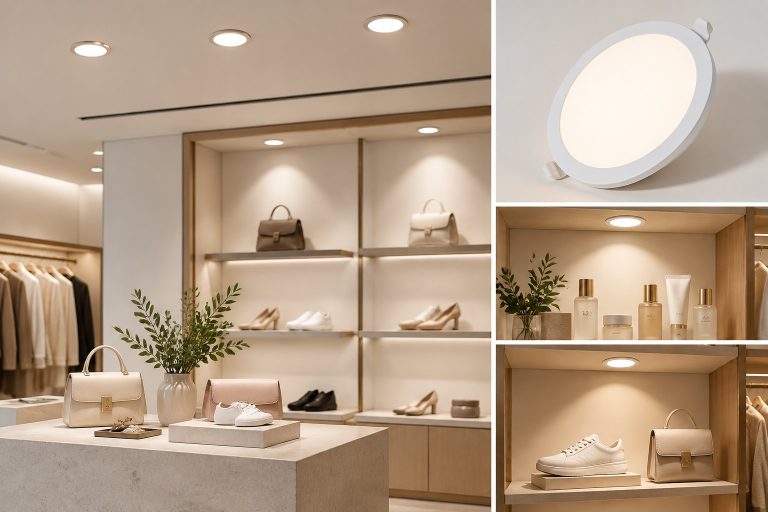
A fashion display relies on more than visibility. Customers need to see fabric texture, color differences, and material details. A cosmetics counter has a similar challenge because customers often compare small variations between shades. For premium products, the lighting may need to create a stronger sense of focus instead of simply covering a large area.
These applications may exist in the same store, but the lighting requirement is not identical.
A display with several products arranged on a shelf usually benefits from balanced illumination. Customers need enough visibility to compare different items. A featured display, on the other hand, often needs more controlled lighting so one product becomes the visual center.
The question during selection is not only “How much light does the fixture produce?” It is “Where does the light help the customer look?”
Why can the same downlight create different results?
Retail spaces contain many variables that influence the final appearance.
A deep shelf may prevent light from reaching products placed further inside. Glossy packaging can create reflections. Dark products may absorb more light than bright surfaces. A fixture that performs well in a test area may behave differently after installation.
This is why display lighting decisions are usually connected with the actual store environment. The distance between the ceiling and merchandise, the shelf arrangement, and the customer’s viewing position all affect the result.
What Makes Beam Angle a Key Choice for Shelf and Display Lighting?
Beam angle is one of the specifications that has the biggest influence on how customers experience a display. It determines whether the light creates a focused highlight or a broader area of illumination.
When does a focused beam work better?
A narrower beam is often used where a retailer wants stronger attention on specific products.
Typical examples include:
- window displays;
- premium collections;
- new product areas;
- promotional sections.
The advantage is visual separation. A featured item can stand apart from surrounding products without increasing the brightness of the entire store.
However, focused lighting also requires more accurate installation. If the fixture position changes, the highlighted area can move away from the intended product. A small difference in ceiling height or mounting location may affect the final display.
When does wider coverage become more practical?
Shelf lighting usually involves more products and more customer movement. Customers often compare several items rather than looking at one highlighted object.
In these situations, wider light distribution can create a more comfortable browsing environment.
| Display Situation | Main Lighting Concern |
|---|---|
| Feature product area | Creating attention without excessive contrast |
| Long shelf display | Maintaining even visibility across products |
| High ceiling store | Delivering useful light to product level |
| Reflective packaging | Controlling unwanted highlights |
The most suitable beam angle depends on the relationship between the fixture and the merchandise. The same specification can produce different results in different store layouts.
Why Do CRI and Color Consistency Affect Retail Product Presentation?
Customers do not see lighting parameters. They see products. The way colors, textures, and finishes appear can influence how shoppers evaluate quality.
How does CRI influence the display effect?
Color rendering becomes especially relevant in product categories where appearance affects customer decisions.
Clothing stores depend on natural-looking colors. Cosmetics brands need customers to understand shades accurately. Furniture and interior products rely on realistic material presentation.
CRI can help describe how well a light source reveals colors, but it does not work alone. A display can have good color performance and still appear unsuccessful if the light distribution creates uneven areas or uncomfortable shadows.
The visible result comes from the combination of:
- color performance;
- beam control;
- product material;
- viewing distance;
- surrounding environment.
Why does color consistency matter more for chain retailers?
A single store may accept small differences between fixtures. A retail brand operating many locations faces a different situation.
Customers expect the same product to appear similar across different branches. If one store has warmer lighting or different brightness levels, the overall brand experience may change.
For this reason, many retail projects create an approved lighting reference before expansion. The reference helps different teams understand the expected appearance instead of relying only on product names or basic specifications.
How Can Retail Brands Keep the Same Lighting Result Across Different Stores?
The first store usually receives the most attention because designers and project teams are closely involved. The challenge comes later, when the same concept needs to be repeated.
Why can store expansion change the display effect?
A multi-location retail project involves different construction conditions, installation teams, and replacement requirements.
Small changes can influence the final result:
- different fixture positions;
- different ceiling structures;
- different installation methods;
- replacement components from later orders.
A replacement fixture may fit the same opening but still produce a different visual effect. Optical design, LED components, and internal configuration can influence how products appear.
What becomes the reference for future projects?
A successful retail lighting project usually keeps more than a purchase order.
Useful references may include:
- approved samples;
- installation photos;
- display examples;
- technical specifications;
- project notes.
These records allow future stores to follow the original design intention instead of creating a new interpretation.
What Should Retail Buyers Confirm Before Ordering LED Downlights in Large Quantities?
The difference between a good sample and a successful rollout often depends on what happens before production.
Why should samples be reviewed with actual products?
A blank wall cannot show every lighting issue.
Real merchandise can reveal:
- reflections from packaging;
- color differences;
- weak product emphasis;
- uneven shelf brightness;
- uncomfortable viewing angles.
A sample review becomes more meaningful when the test environment is close to the final store. The product, shelf structure, and customer position all influence the result.
What needs to be confirmed before production starts?
Before large quantities are ordered, the approved lighting effect needs to be connected with technical information.
The project record should clearly define the selected configuration, installation requirements, and expected display result. This gives purchasing teams and installation partners a common reference during production and delivery.
Need Help Matching Display Lighting Requirements with Downlight Specifications?
Lionway Electronics Co., Limited provides LED lighting development and manufacturing capabilities, including lighting design, mold development, production processes, optical testing, and professional testing equipment according to its company information. For retail applications, buyers can review the company’s downlight category when comparing options for product display and shelf lighting. Project teams can discuss application conditions, technical requirements, and sample evaluation through the contact page before production approval. The final selection should be based on merchandise requirements, store conditions, and confirmed project standards.
Conclusion
LED downlight selection for retail displays is closely connected with how customers experience products. Beam angle affects where attention is directed, CRI influences product appearance, and color consistency determines whether the same brand image can continue across different locations. Testing lighting with real merchandise before large-scale installation helps reveal problems that technical documents cannot show. When display requirements and lighting specifications are considered together, downlights become a more reliable part of the retail environment.
FAQs
1. Should retail brands choose LED downlights only by brightness?
No. Brightness is only one part of the decision. Beam distribution, color performance, product arrangement, ceiling height, and viewing distance all influence whether the lighting supports the intended display effect.
2. How does beam angle affect product displays?
Beam angle controls how concentrated the light appears. Narrow beams can create stronger focus for featured products, while wider distribution may work better for shelves and larger merchandise areas.
3. Why is CRI important for retail lighting?
CRI affects how accurately customers see product colors and materials. It is especially useful for categories such as fashion, cosmetics, furniture, food, and other products where appearance influences purchasing decisions.
4. How can retail brands maintain consistent lighting between stores?
Brands can maintain consistency by keeping approved samples, installation references, technical specifications, and display standards. These records help different locations reproduce similar lighting results.
5. Should LED downlights be tested with actual merchandise?
Yes. Real products reveal reflections, shadows, color changes, and display problems that may not appear during a basic lighting test.