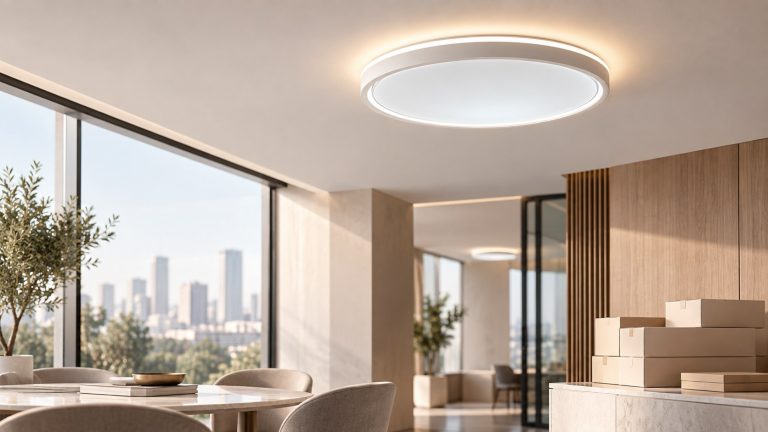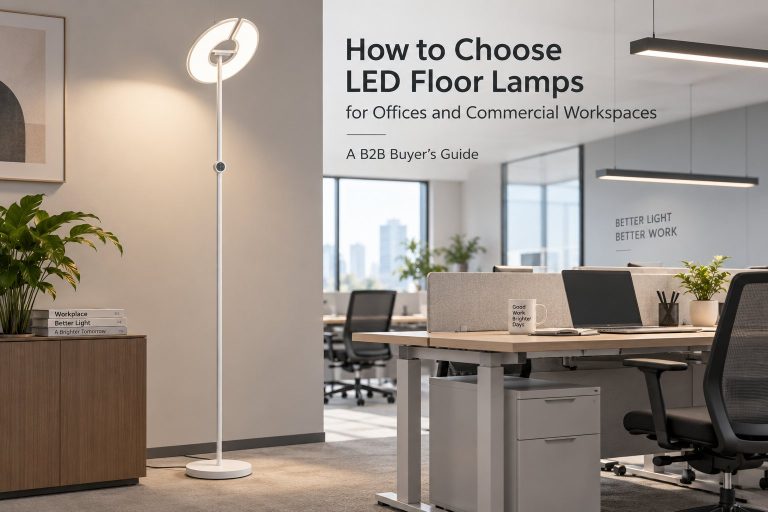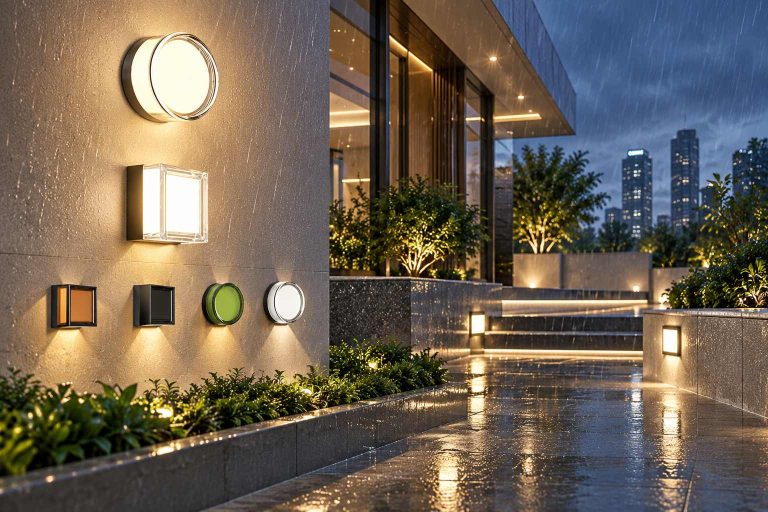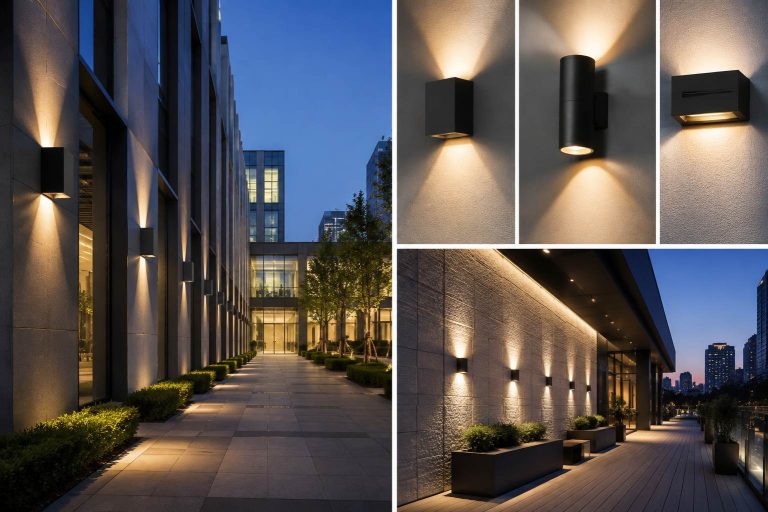
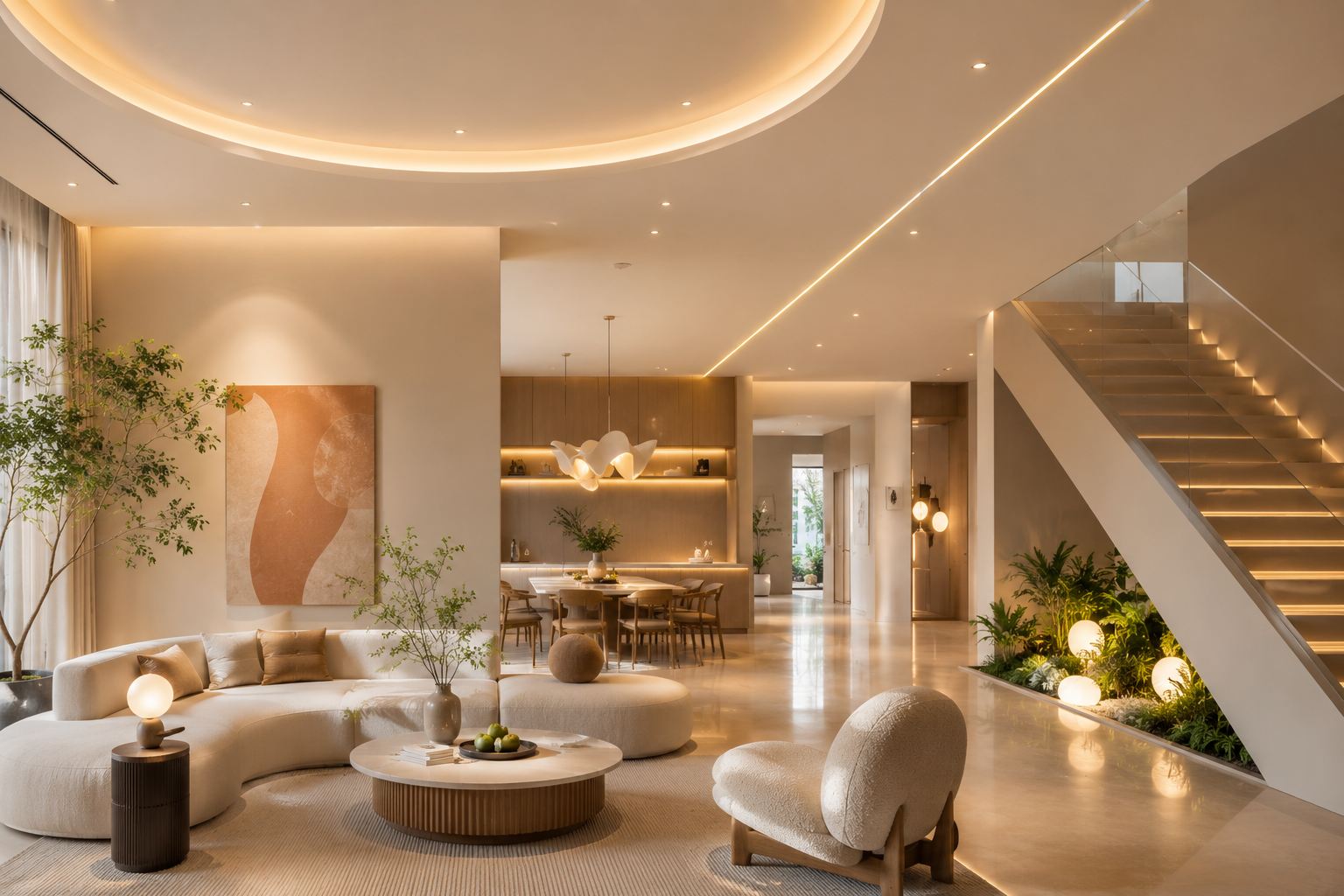
 The latest trends for the LED lighting market 2026 for the target groups distributors, contractors, lighting designers, facility managers and private-label buyers are no longer restricted to increased luminous flux or reduced wattage. Instead buyers are comparing smart lighting controls, color, glare, driver, heat, IP rating, installation height, maintenance access, photometric data, documentation and supplier readiness. According to the U.S. Department of Energy LED lighting is highly energy efficient. Compared to incandescent lighting residential LED lighting bearing the mark of ENERGY STAR is using at least 75% less energy and is lasting even up to 25 times longer. This high performance is certainly one of the reasons why LED lighting is still at the core of the current lighting trends 2026.
Which smart lighting trends should buyers watch first?
Smart lighting is shifting from being a premium feature to a basic requirement for many building and home automation projects. In addition to being easy to install, users require a lighting solution that remains stable after initial commissioning. Above all, the solution must be compatible with the relevant building or home automation platform.
1. Why are connected lighting systems becoming more common?
Connected lighting systems use sensors and network connectivity along with distributed intelligence to automatically control lighting based on a number of factors including presence, time of day, outside light, and operational requirements. Connected lighting systems can monitor and record how lighting systems are used as well as the surrounding environment creating opportunities for data to be used in a variety of new ways including monitoring and measurement. The Department of Energy describes connected lighting systems in more detail.
When purchasing a product as a B2B buyer, you would check several things on the product details page such as the communication protocol, dimming percentage, compatibility with sensors, the method of commissioning and after-sales service offered. A smart light fixture that is difficult to pair or reset will most likely generate complaints from the installing electrician.
2. Why are networked lighting controls important?
Networked lighting controls are becoming more common for commercial offices, retail stores, warehouses, schools, and hotels. DesignLights Consortium resources outline typical design strategies such as dimming, high-end trim, automatic occupancy control, automatic vacancy control, time-based control, and daylight response control.
It is useful to request from the supplier control diagrams, compatibility lists and commissioning instructions before you place a large number of orders. Even controls which support energy-efficient operation are only effective if they are correctly installed and configured.
How is human centric lighting changing product selection?
 Human centric lighting is becoming increasingly practical as consumers begin to move on from simply being offered a CCT. As well as making sure a space is adequately lit, Human centric lighting can help to provide comfort as well as support a number of visual tasks whilst also ensuring that appropriate levels of light are received.
3. Why are tunable white systems gaining demand?
Tunable white enables you to set up a project to change color temperature at different times or for different activities. For example, an office may run cooler in the day to support focus work whilst a hotel or home could run warmer in the evening to support relaxation.
When purchasing a product check the CCT range, smoothness of dimming, the amount of flicker control available, control compatibility and most importantly the color quality maintained by the product at all points across the tuning range.
4. Why do melanopic and circadian metrics matter?
The discussions on Human centric lighting more and more include non-visual effects of light. CIE S 026:2018 defines several new and innovative metrics to quantify optical radiation effects relevant for ipRGC mediated responses. In its position paper released for the CIE Division 1 Meeting 2014 in Paris CIE 2024 emphasizes measurement of light at the observers eye not just on a horizontal work surface.
Buyers should be wary of projects promoting “healthy lighting” with little substance behind the claims. These projects should instead be defined by clear design targets, empirical data, and design guidance specific to application.
Which performance trends matter for commercial LED lighting?
Even though the products look great in the catalog, the commercial buyer must have assurance of how the product will perform after it has been installed. This can be established by referencing the specifications, reviewing the test data, and reviewing samples.
5. Why is better color quality still a key trend?
CRI remains common, but some professional buyers also ask for TM-30 data. The Department of Energy explains that ANSI/IES TM-30 is a method for evaluating light source color rendition and offers measures beyond traditional CRI.
For retail, hospitality, museums, beauty shops, and food displays, the appearance of products is key to the customers’ experience. CRI, TM-30 where available, CCT tolerance and sample consistency must be compared by the buyer.
6. Why are glare control and optical design becoming more important?
As LEDs become more powerful, glare control becomes a bigger issue. Downlights, panels, track lights, and linear fixtures should be checked for beam angle, diffuser quality, UGR information where applicable, and fixture layout.
Just because a light has a high lumen count does not mean it is suitable for an application. For our project orders we look at the photometric files for the proposed fixture as well as provide mockups for installation to ensure that the light does not create discomfort or uneven lighting.
7. Why are drivers and thermal design still deal-breakers?
The quality of the driver and the heat dissipation influences flicker and noise, dimming, lifespan and warranty claims. Therefore also check the brand or specification of the driver, the surge protection, the operating temperature, the housing material and the conditions of installation.
A low-cost initial installation can quickly become very expensive should early failure of the lamps or poor thermal design result in rapid lumen depreciation.
How are sustainability and maintenance shaping LED lighting trends?
 When making purchasing decisions for sustainable lighting, factors to consider now include the energy used by the product, its lifespan, packaging, replaceability and maintenance requirements. Buyers should be wary of general claims and seek out specific information.
8. Why is repairability becoming more valuable?
Increasingly our customers want to know whether drivers, lenses, brackets or even modules can be exchanged. The option to replace individual components can certainly be a cost effective measure during maintenance of a commercial installation; however it does pose extra design requirements.
As a buyer you should ask for spare parts, for a replacement guide, for MOQ, for lead time and for compatibility for future production runs.
9. Why are recyclable packaging and lower-waste logistics gaining attention?
The packaging of products has three main factors, sustainability, breakage and cost of freight. The packaging of LED lighting products will consist of foam, molded pulp, cartons, labels and/or pallet protection depending on the dimensions and fragility of the product.
Reducing packaging materials is not the end goal. The buyer’s goal for reducing packaging is safe delivery of products using fewer unnecessary packaging materials. The buyer should review the packaging design, the drop test experience, the strength of the cartons, and the labeling used.
10. Why is application-specific LED lighting becoming more popular?
More and more Lighting Buyers make their purchasing decisions based on the application for which the fixtures will be used: offices, hotels, shops, outdoor areas, warehouses, schools and hospitals as well as homes. Each of these areas requires different parameters such as efficacy, CCT, CRI, IP, beam width, glare control and method of suspension.
| Application | Buyer priority | Specification to check |
| Office | Comfort and controls | UGR, CCT, dimming, sensors |
| Retail | Product appearance | CRI, TM-30, beam angle |
| Outdoor | Durability | IP rating, housing, surge protection |
| Hotel | Mood and consistency | CCT tolerance, dimming smoothness |
| Warehouse | Output and maintenance | efficacy, mounting height, lens type |
Who can support buyers looking for LED lighting products in 2026?
Lionway Electronics is introduced by the company’s website as a specialist supplier of LED lighting including chandeliers, panel lights, exterior lighting, smart lighting, human centric lighting, commercial lighting, packaging and bespoke orders of various kinds of LED lighting. With extensive experience of supplying LED products since 2008 and approvals or certifications including ISO, CE, ETL, SAA, FCC, DLC, 3C and RoHS, the company’s products could be a useful starting point for distributors, contractors, brand owners and project buyers comparing a variety of smart and human centric lighting products. However, prior to making any decisions regarding supplier approval, it is strongly recommended that buyers compare samples, detailed specifications and photometric data where relevant together with any supporting product and sales literature, compare prices, delivery terms and after sales service proposed by competing suppliers.
Conclusion
This article summarizes some of the main LED lighting trends of 2026, how they are becoming more technical, more connected and more application-specific. When selecting smart lighting and the relevant networked controls for better management of buildings, it is wise to check on compatibility and commissioning details. When using Human centric lighting it is wise to use the relevant metrics rather than make vague wellness claims. When buying products to ensure they are sustainable, energy, packaging, repairability and the related maintenance planning need to be considered. In summary, the most effective way of purchasing the correct LED lighting is by matching the specifications, documents, samples and supplier support required for a particular project to the real environment in which that project is sited.
FAQs
1. What are the top LED lighting trends in 2026?
The main trends include smart lighting, networked controls, tunable white systems, human centric lighting, better color quality, glare control, stronger drivers, repairability, lower-waste packaging, and application-specific fixtures.
2. Why is smart lighting important for commercial projects?
Smart lighting can be configured to support scheduling, dimming, occupancy detection and daylight control. However, buyers should check compatibility with the rest of their system and also get confirmation on the required commissioning.
3. Is human centric lighting the same as tunable white lighting?
No, tunable white is just one tool in human centric lighting. Other factors such as light level, timing, spectrum, exposure at the eye, as well as application specific design are also crucial.
4. What documents should LED lighting buyers request?
Buyers can request additional documents such as specification sheets, photometric files, driver data sheets, safety data sheets, packaging details, installation instructions and test reports when required.
5. How can buyers reduce LED lighting sourcing risk?
Verify sample, verify photometric data, verify driver and thermal design, verify control compatibility, verify all documents, verify package before entering into full production.