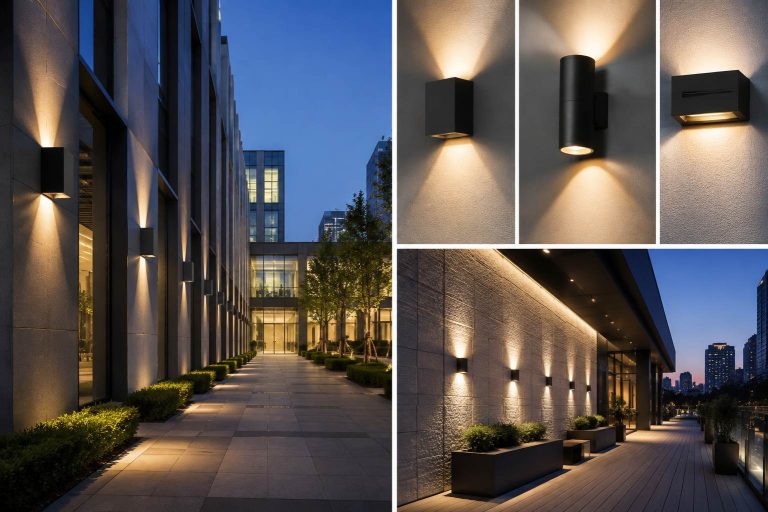
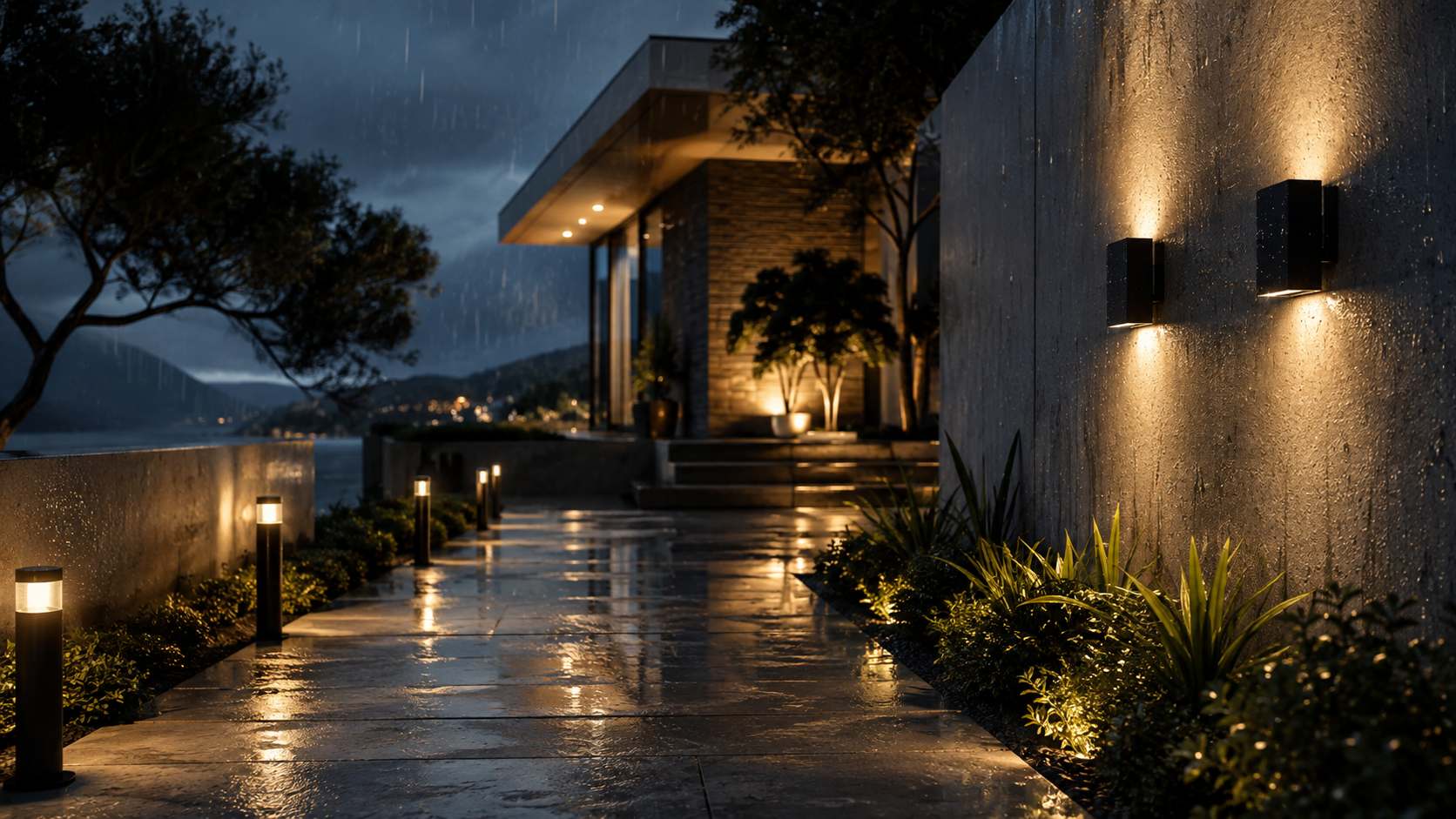
While specifying outdoor lights, one usually focuses on such parameters as location and wattage. However, it is vital to check how a fixture’s housing will protect its components. A light source placed under a canopy will experience different conditions than one mounted near the landscape. For buyers, the IP rating of LED lamps in their area is essential because the code indicates what weather conditions the housing can resist. However, its importance is overestimated in the context of a particular location since even the most reliable protection corresponds only to a specific scenario.
How Should Buyers Read an IP Rating Before Choosing LED Lights?
An IP code has two digits, and each answers a different question. The first deals with solid foreign objects and dust. The second deals with water. Reading them separately is more useful than assuming that a larger overall number means a better light.
The First Digit Shows Protection Against Solids
For exterior lighting, buyers commonly see first digits of 4, 5, or 6. A rating beginning with 4 protects against relatively small solid objects. A first digit of 5 adds stronger dust protection, while 6 indicates a dust-tight enclosure.
This matters on roadside walls, warehouse exteriors, and industrial sites, where dust can collect around joints and cable entries.
The Second Digit Needs to Match Water Exposure
Splashing water, water jets, powerful jets, and immersion are different conditions.
IP44 is generally associated with splash protection. IP54 adds stronger dust protection while retaining splash resistance. IP65 is dust-tight and protects against water jets; IP66 addresses more forceful jets. IP67 covers temporary immersion, while IP68 is used for continuous immersion under specified conditions.
So an IP67 fixture is not simply a “better IP65.” It is intended for a different water risk.
Which IP Ratings Fit Outdoor and Wet-Area Lighting Conditions?
The site should decide the rating. “Outdoor” is too broad because a sheltered entrance, open façade, ground recess, and fountain expose fixtures differently.
Sheltered Walls and Open Façades Need Different Protection
A light deep under a roof may face humidity, condensation, and limited splash. Depending on the project and local requirements, IP44 or IP54 can suit some protected positions.
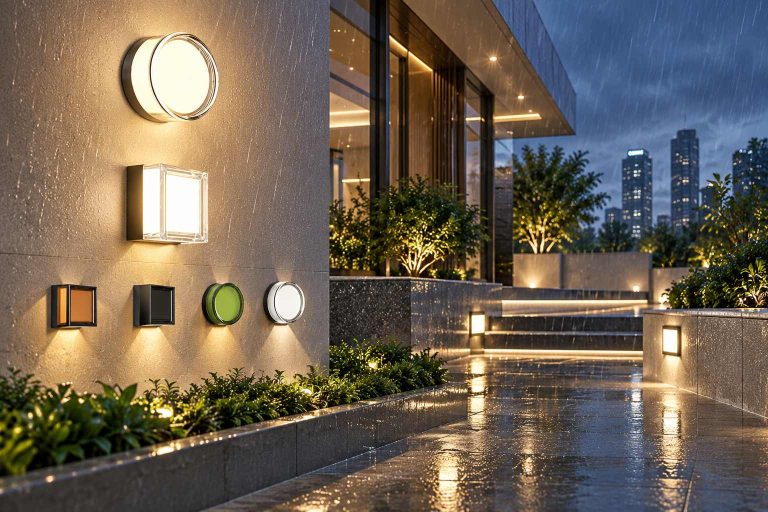
An exposed outdoor LED wall light needs more protection. Wind-driven rain can reach joints, the rear housing, and cable entry from unexpected angles. IP65 is commonly used because it combines dust-tight construction with water-jet protection. Where severe weather or routine washdown is expected, IP66 may be more appropriate.
Ground-Level and Immersed Lights Require Separate Evaluation
Water may collect around or near ground mounted equipment following large amounts of rainfall or irrigation. If the product can tolerate temporary submersion, the specification IP67 might be considered, but attention must be given to drainage and cable glands.
For underwater applications the degree of protection is taken to a new level by considering IP68, but again the purchaser needs to be aware of maximum permitted depths, method of installation, cable entry details and any electrical requirements. Similarly, in an indoor situation a bathroom mirror unit is very different from one that is likely to be exposed to splash from a shower.
Why Can Two Lights With the Same IP Rating Behave Differently?
The IP number describes enclosure protection under defined conditions. It does not measure every part of outdoor durability, nor does it remove differences in design, materials, assembly, or installation quality.
Seals and Cable Entries Often Become Weak Points
A waterproof outdoor light may have a good rating on paper but without proper control of the details during assembly it will not achieve that rating in practice. This may happen due to improperly formed gaskets of the enclosure, a wrong choice of cable glands or the accumulation of moisture in the holes of the wall-mounted housing.
Therefore, it is necessary to examine samples closely, paying attention to the seating of the gaskets, the compression of the junctions, the entry of cables, the protection of connections and the degree of water discharge of the luminaire in the working position, since these details may indicate the quality of the product, unlike the picture in the catalog.
IP Protection Does Not Cover Corrosion, UV, or Heat
A coastal project is a good example. An IP65 enclosure may resist rain yet still be unsuitable if its coating, screws, or mounting hardware cannot tolerate salt exposure.
The same applies to strong sunlight, heat, cleaning chemicals, and impact. An outdoor wall light waterproof claim should not end the technical review. Housing material, finish, hardware, and thermal design still need attention.
What Should Buyers Inspect Before Approving an Outdoor Light?
Once the required IP level is clear, check whether the finished luminaire suits the project, especially when buying in volume.
Confirm the Rating Applies to the Complete Product
The IP rating should relate to the finished luminaire in its intended mounting position, not merely to an LED module or one internal component.
Before approval, review:
- Housing joints and rear cover
- Gasket design and seating
- Cable glands and connectors
- Driver compartment protection
- Mounting orientation
- Model-specific technical documentation
Orientation is easy to overlook. A fixture designed for vertical wall mounting should not automatically be rotated, recessed, or installed near the ground unless that use is confirmed.
Check Market Requirements Separately
Ingress protection and electrical compliance are related, but they are not interchangeable.
For North American projects, buyers may also need to confirm damp- or wet-location suitability under the applicable product requirements. An IP code alone should not replace the certification or marking required by the project.
Before bulk purchasing, review voltage, driver specification, installation method, certification needs, and environmental limits alongside the IP rating.
How Should a Supplier Be Evaluated for Outdoor and Wet-Area LED Projects?
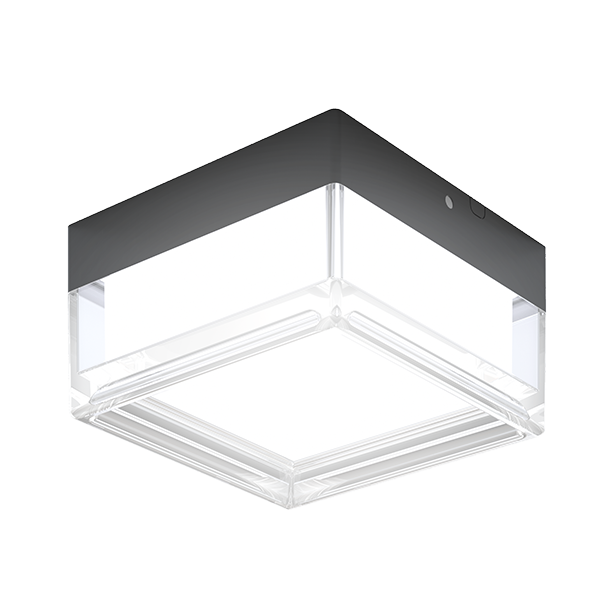
A useful supplier discussion starts with the application, not the phrase “send me your waterproof model.” Specific project information makes it easier to judge whether the proposed fixture is actually suitable.
Technical Documents Should Match the Exact Model
Ask whether the IP rating belongs to the exact model, housing size, cable arrangement, and driver configuration being offered. If several versions share one product name, do not assume every version has identical protection.
Before a large order, sample inspection can help. Check assemblies for conformity with specifications, coating, location of gaskets, entries for cables, connectors, and mounting accessories. A supplier has to indicate limitations, for example, a product’s inability to withstand immersion, exposure to coastal climates, high-pressure washing, or installation in a particular orientation.
Better Project Information Leads to Better Product Selection
Ask for something more specific than “IP65 garden light.” Tell the supplier what is the mounting location, degree of shelter, projected exposure to water or irrigation, cleaning requirements, destination market, and any other special environmental needs.
That way, they could advise you which one between IP54, IP65, IP66, or any other standard suits your conditions best. For the B2B buyer, the higher the IP rating is, the less relevant it is – a properly selected enclosure, materials, paperwork, and installation practices matter more.
Why Consider Lionway Electronics for Outdoor LED Lighting Projects?
Lionway Electronics supplies LED lighting for B2B applications, including outdoor, wall, ceiling, down, and panel lighting categories. The manufacturer states that it has focused on LED products since 2008 and supports work related to lighting design, mold development, manufacturing, and product testing. For outdoor projects, that makes technical discussion around application conditions especially relevant before a model is selected. Buyers can compare fixture type, intended mounting position, electrical requirements, and available product documentation against the needs of the project. Model-level IP ratings, destination-market requirements, installation limits, and available technical documents should still be confirmed before a bulk order is approved.
Conclusion
The IP rating for such equipment as LED should only be taken under the context of its location. For example, the protected wall mounting, exposed façade, ground recessed, and underwater fixtures are each exposed to a different degree of danger, despite being commonly known as outdoor lights. Considering the level of exposure and protection, buyers should research the specifics of water, dust, drainage, seal, material, mounting location, and region-specific regulations for their intended fixtures. Overall, the IP degree is not the highest priority, rather than the specific location, which should define the choice of the outdoor light fixture.
FAQs
1. Is IP65 enough for an outdoor wall light?
IP65 is commonly used for exposed wall lighting because it is dust-tight and resists water jets. Sites with stronger washdown, flooding risk, or unusual weather may require a different level.
2. What is the difference between IP65 and IP67 LED lights?
IP65 is intended for dust and water-jet protection, while IP67 adds protection against temporary immersion. The correct choice depends on whether the fixture may actually sit in water.
3. Can IP44 LED lights be used outdoors?
They can suit some sheltered outdoor positions with limited splash exposure. Direct rain, wind-driven water, installation orientation, local electrical rules, and the manufacturer’s intended application should still be checked.
4. Does IP68 mean a light can stay underwater permanently?
IP68 is associated with continuous immersion under specified conditions. Buyers still need to confirm allowed depth, installation method, cable requirements, and any other limits stated for the specific product.
5. What should buyers ask a supplier about the IP rating for LED lights?
Ask whether the rating applies to the exact finished model, mounting position, cable entries, connectors, and driver configuration, and whether supporting technical documentation is available for that specific version.