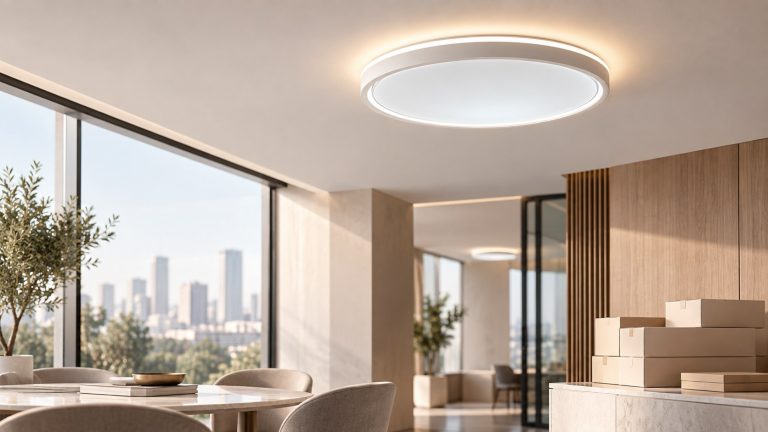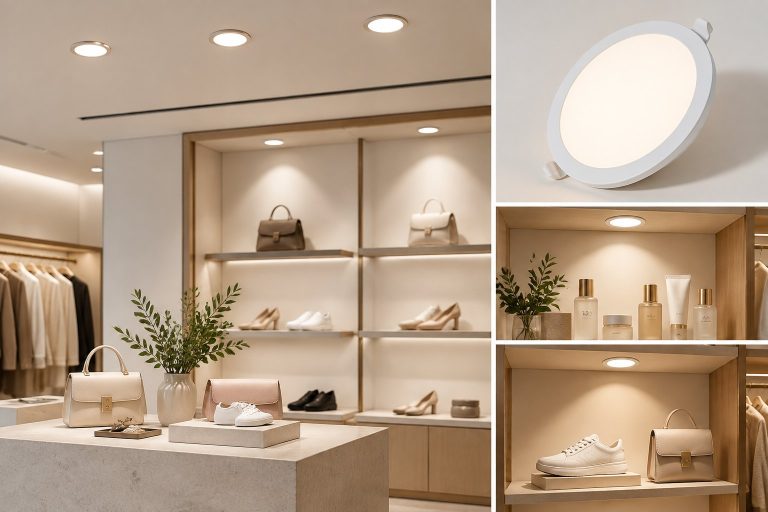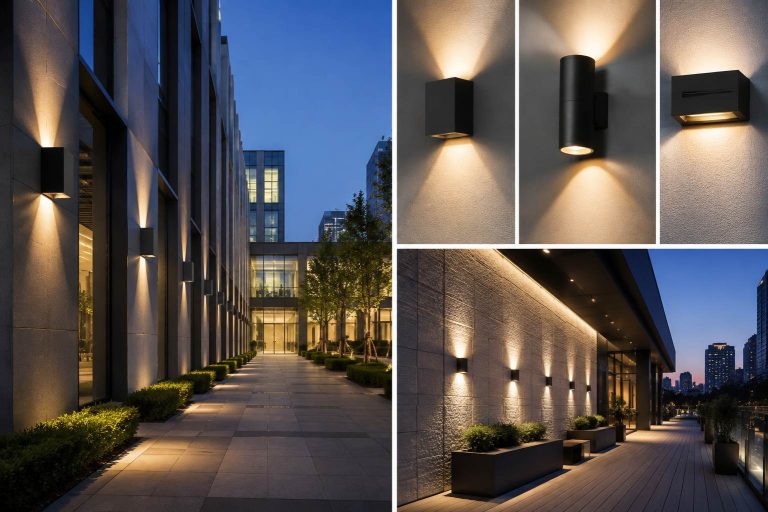
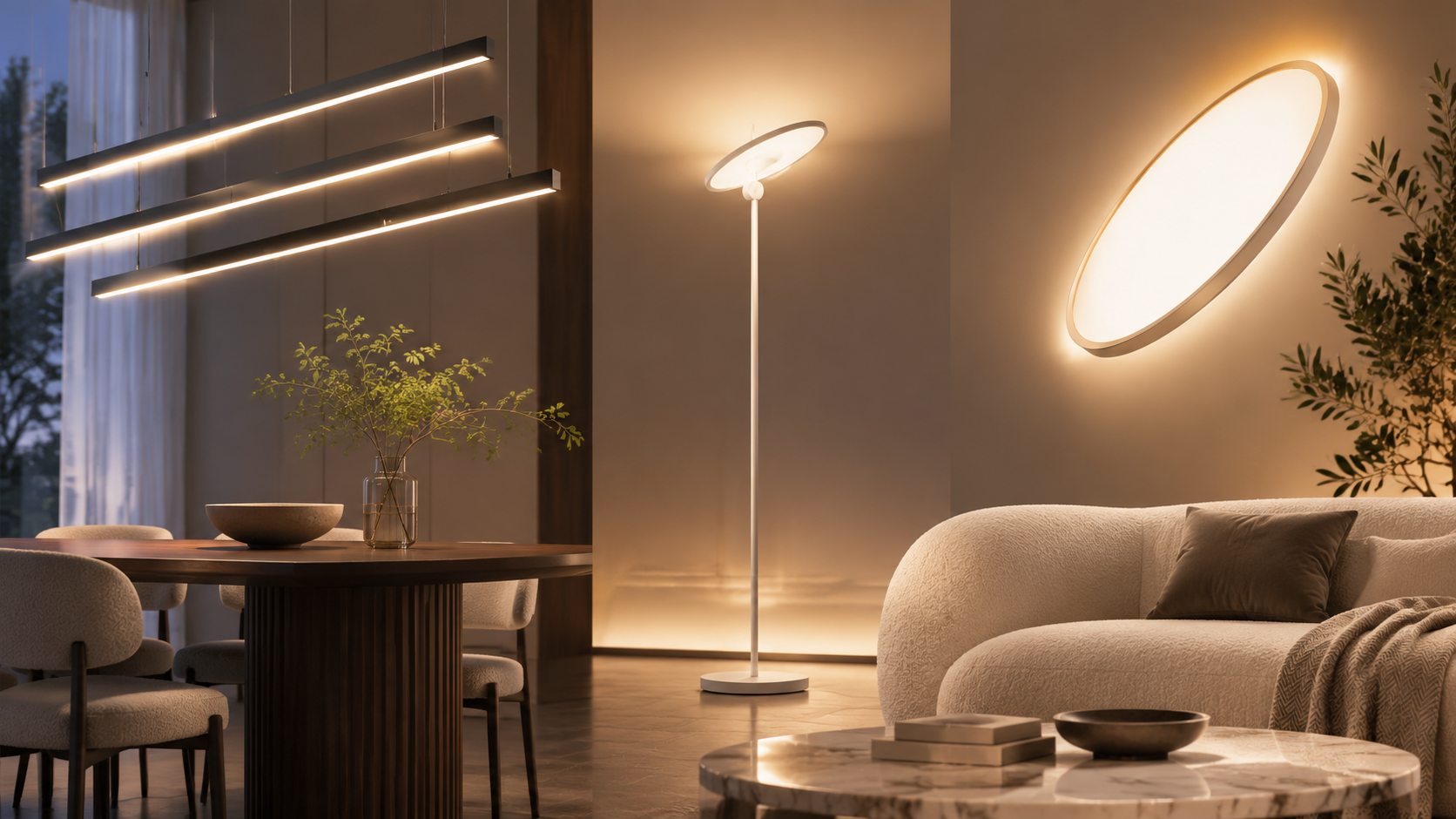
LED panel lights can be similar in terms of the ceiling footprint, but differ drastically in terms of optical design. Edge-lit LED panel lights have LEDs placed along the perimeter of the panel which then excite the light guide plate to emit light, while back-lit LED panels have the light emitting diodes placed at the rear of the panel illuminating directly the diffusing sheet. The difference in design influences the thickness, thermal management, glare control, shipping size, efficacy, and maintenance requirements. When comparing the differences between the two types of LED panels and understanding their differences and advantages, buyers should focus on the installation location, thickness, visual requirements, and operating conditions rather than watts or aesthetics.
How do edge-lit and back-lit LED panel lights produce light differently?
Both designs use LEDs, a driver, a housing, and a diffuser, but the optical path is not the same. That difference influences nearly every later purchasing decision.
How does an edge-lit panel work?
LED strips are mounted along one or more sides of the frame. The light emitted by them is sent through a translucent light guide plate, inside which, with the help of a printed or engraved pattern, it is directed to the desired place in the room. To achieve the desired effect, two more components are needed: a diffusing layer on top and a reflective one at the bottom.
Together they allow you to create a slim profile, typical for such LED strips, so that the lamp does not protrude substantially from the ceiling. It can be used both in a standard hanging version and in a built-in scenario if, for example, it is necessary to highlight the profile of a false ceiling. By the way, the light guide plate is the heart of such a system, and poor quality printing or engraving on it can lead to the appearance of dark lines, light patches, or loss of brightness over time.
How does a back-lit panel work?
Back-lit panels mount the light emitting diode (LED) modules or strips at the rear plate facing the diffuser. Due to the short and straight path of the light, back-lit panels do not require a light guide plate. However, spacing between the LED and diffuser is important to avoid any point lighting.
The deeper the housing, the better the mixing of the light and the more room to position the LEDs, but it also reduces the applicability of shallow ceiling voids. The LED pitch, diffuser transmission, and depth must be considered when designing a back lit panel in order to have homogeneous lighting while reducing the superfluous materials.
Which design performs better for efficiency, glare, and visual comfort?
Neither construction is automatically superior. Results depend on the complete optical system, LED package, driver, diffuser, thermal design, and test conditions.
When can back-lit panels provide higher system efficiency?
A shorter optical path can reduce losses associated with the light guide plate and multiple internal layers. This gives back-lit designs a practical route to strong lumens per watt, particularly when the diffuser transmits light efficiently and LED spacing is well controlled.
Reducing depth too far can create visible hotspots. Manufacturers may respond with heavier diffusion, which can lower output. Buyers should compare tested luminaire efficacy rather than assumptions based on structure. Test reports should identify input power, luminous flux, voltage, and operating conditions.
Why are glare and uniformity separate issues?
A large luminous surface emitting adequate brightness may still create glare if its luminance is too high, its light is not adequately diffused, or it is placed in a line of sight. It may be necessary to specify more careful control of glare for offices, classrooms, and medical facilities than for a warehouse or a circulation space.
Edge-lit panels can create a smooth appearance when the guide plate and diffuser are well matched. Back-lit panels can achieve similar uniformity with correct depth and LED spacing. Buyers should inspect illuminated samples from normal viewing angles rather than relying on front-facing photographs.
Where should buyers use edge-lit or back-lit LED panel lights?
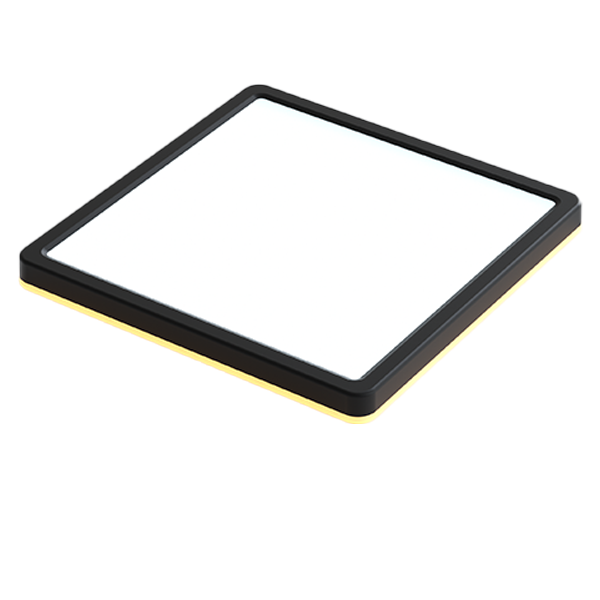
Application fit depends on ceiling construction, room use, operating hours, maintenance access, and visual expectations. One panel design may not suit every project.
Which applications favor edge-lit panels?
Edge-lit panels are suitable for shallow recessed spaces, suspended office lighting, retail interiors, reception areas, and architectural projects where a slim profile matters. Their thin body can simplify installation when ceiling clearance is restricted.
The light guide plate adds cost and introduces another aging-sensitive component. Heat, ultraviolet exposure, or material variation may contribute to yellowing or reduced uniformity over time. Long operating hours and warm ceiling spaces should therefore be considered during sample qualification.
Which applications favor back-lit panels?
Back-lit panels are commonly considered for offices, schools, commercial corridors, general retail, public buildings, and projects where ceiling depth is available. Their simpler optical stack can support cost control and a practical thermal layout.
They are not automatically suitable for every low-glare specification. LED spacing, diffuser quality, driver flicker, color consistency, and mounting height still matter. In exposed suspended installations, the deeper housing may also affect appearance, carton size, and shipping efficiency.
What quality and failure risks should buyers inspect before approval?
Panel light problems often appear as optical or electrical variation rather than complete failure. A sample may illuminate normally while showing flicker, color shift, edge shadows, or driver noise under closer inspection.
Which components create common failures?
In edge-lit models, the light guide plate, reflective film, edge coupling, frame pressure, and LED-strip alignment affect uniformity. Dust inside the optical stack can create visible spots. Warped plates or poor frame assembly may produce bright lines and dark zones.
Back-lit panels are sensitive to LED pitch, rear-plate flatness, diffuser distance, and thermal contact. Both types can suffer from driver failure, loose connectors, poor solder joints, overheating, LED color variation, and diffuser discoloration. The mounting frame and safety cable should also match the installation method.
How should finished panels be tested?
Incoming or pre-shipment inspection should cover dimensions, wattage, power factor where specified, luminous output, CCT, CRI, color consistency, flicker, driver noise, temperature rise, insulation, grounding where applicable, and light uniformity. Dimming versions should be checked throughout their operating range.
Aging tests and repeated switching can expose driver or connection weaknesses that a short functional check misses. Packaging trials should include corner protection, diffuser support, carton strength, and pallet loading because a bent frame can create installation gaps even when the light still works.
How should procurement teams compare LED panel light suppliers?
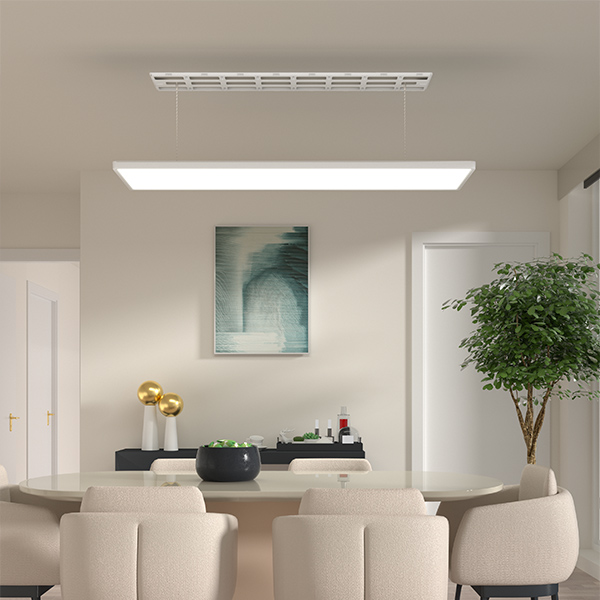
A suitable supplier should provide model-specific data and explain how the optical and electrical components are controlled. General statements about long service life or energy savings do not help buyers compare products.
Which documents and samples reduce purchasing risk?
Request dimensional drawings, photometric data, electrical specifications, driver information, material descriptions, installation instructions, packaging details, and destination-market compliance documents. Each report should match the exact wattage, size, voltage, driver, and optical construction being quoted.
Samples should be evaluated after warm-up in the intended mounting position. Compare brightness, color, glare, edge shadows, hotspot visibility, driver sound, dimming behavior, and surface temperature. When several color temperatures are ordered, inspect them together for visual consistency.
Which repeat-order controls matter?
The approved specification should identify the LED package, driver model or controlled equivalent, diffuser, light guide plate where used, housing thickness, wiring, connectors, and packaging. Buyers should require notice before changes to components that influence output, color, flicker, temperature, or compliance.
Batch labels and retained samples make later comparison easier. Minimum order quantity, lead time, spare-driver availability, warranty procedures, and replacement handling should also be defined before volume purchasing.
How can an LED lighting supplier support panel light projects?
Lionway Electronics offers LED lighting products for dealers, contractors, and project buyers. When purchasing panel lights, an individual has to provide the following information: fixture size, wattage, volts, color rendering index, correlated color temperature, dimming types, ceiling type, glare specification, installation depth, and the necessary documentation. In addition, the customer has to examine the sample for lumen performance, color rendition, light distribution, flickering, driver noise, temperature rise, the fixing equipment, and packing. Quotations should identify the optical structure, driver configuration, diffuser, housing, accessories, inspection items, lead time, and change-control terms.
Conclusion
The edge-lit vs back-lit LED panel lights decision should follow the project rather than a general rule. Edge-lit panels suit shallow spaces and slim visual profiles, while back-lit designs can offer a simpler optical path and practical thermal layout. Buyers still need to compare efficiency, glare, uniformity, driver behavior, temperature, construction, and compliance for the exact model. Representative samples, controlled components, and documented inspection criteria are essential for reliable repeat orders.
FAQs
1. Are back-lit LED panel lights more efficient than edge-lit panels?
They can be because the optical path is more direct, but actual efficiency depends on LEDs, diffuser transmission, driver losses, depth, and thermal design. Compare tested luminaire data.
2. Which LED panel light is suitable for a shallow ceiling?
Edge-lit panels are usually easier to install where ceiling depth is limited because the light guide plate supports a thinner housing. Confirm driver placement and mounting clearance before ordering.
3. Do edge-lit LED panels have better light uniformity?
Not automatically. Good uniformity depends on light guide design, LED spacing, diffusion, assembly, and aging control. Both structures can produce uneven light when components or dimensions are poorly matched.
4. What should buyers inspect in LED panel light samples?
Check luminous output, CCT, CRI, uniformity, glare, flicker, driver noise, temperature rise, dimming, dimensions, mounting hardware, labels, surface finish, and packaging after the fixture reaches operating temperature.
5. How should buyers compare edge-lit vs back-lit LED panel lights?
Compare installation depth, system efficacy, glare, uniformity, thermal design, component control, packaging, documentation, and total project cost. The suitable choice depends on the application and ceiling conditions.